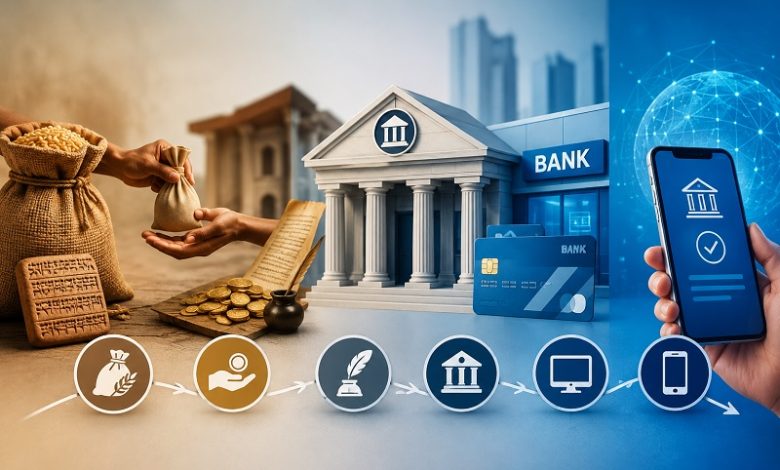
For decades, the path to securing a loan was remarkably rigid. A consumer would walk into a local bank branch, sit across a mahogany desk from a loan officer, and wait for a single, three-digit number to dictate their financial future. The traditional credit score was the absolute gatekeeper of financial mobility. If your credit history was robust, the vault opened. If you were part of the millions of consumers with a thin file, or if past financial turbulence had marred your record, the doors remained firmly shut.
Today, the financial landscape looks radically different. The proliferation of financial technology companies, peer-to-peer lending platforms, and point-of-sale financing has decentralized the lending ecosystem. Consumers can now secure tens of thousands of dollars in personal loans from their smartphones while waiting for their morning coffee. Yet, while the institutions providing the capital have changed, the fundamental requirement to establish trust has not. Lenders still need to predict the likelihood of repayment. What has changed is how that trust is measured. In the modern era of alternative lending, credit history is no longer a static snapshot; it has evolved into a dynamic, multidimensional profile.
The Shift from Legacy Banking to Fintech Ecosystems
To understand the modern role of credit history, one must first recognize why consumers and investors are bypassing legacy banks. Traditional banking institutions are bound by stringent regulatory requirements and legacy technology infrastructure. Their underwriting processes are historically conservative, relying heavily on standard credit bureau reports and manual income verification. This methodology, while safe, is incredibly slow and inherently exclusionary.
Alternative lenders recognized this friction and built platforms optimized for speed, user experience, and broader inclusion. Online-only personal loan providers and peer-to-peer lending platforms stripped away the physical overhead of brick-and-mortar branches, passing the savings on to borrowers in the form of competitive interest rates. However, removing the human loan officer meant these platforms needed a highly sophisticated way to assess risk instantly. They did not abandon traditional credit history; instead, they ingested it into automated decision engines that process applications in milliseconds.
In this ecosystem, a traditional credit score often serves as a baseline filter rather than the final verdict. It determines which algorithmic underwriting track a borrower is routed to, setting the stage for a much deeper, technology-driven financial assessment.
Moving Beyond the Three-Digit Gatekeeper
While alternative lenders still pull data from the major credit bureaus, they recognize that a traditional credit score is fundamentally a lagging indicator. It tells a lender how a consumer managed debt in the past, but it provides very little insight into their current liquidity or day-to-day financial habits. To bridge this gap, modern lenders have pioneered the use of alternative credit data.
The Rise of Cash-Flow Underwriting
One of the most significant breakthroughs in modern lending is cash-flow underwriting. Through secure open banking protocols, applicants can grant lenders read-only access to their primary checking and savings accounts. This allows the lender’s algorithms to analyze real-time financial behavior.
Instead of merely looking at past credit card payments, the lender can verify consistent direct deposits, analyze daily average balances, and flag high-risk behaviors like frequent overdrafts or excessive spending on volatile assets. For a borrower with a mediocre traditional credit score but strong, consistent current income and disciplined savings habits, cash-flow underwriting provides a powerful avenue for loan approval that a traditional bank would outright deny.
Leveraging Alternative Payment Histories
Historically, the most consistent bills a consumer paid—rent, utilities, and telecom services—did not positively impact their credit score because property managers and utility companies rarely reported to credit bureaus. Alternative lenders have actively rewritten this rule. Many modern lending algorithms now ingest alternative payment histories. By proving a multi-year track record of on-time rent and utility payments, borrowers can demonstrate financial reliability to non-bank lenders, effectively building a shadow credit history that accurately reflects their responsibility.
The Buy Now, Pay Later Phenomenon
Nowhere is the evolution of credit history more visible than in the Buy Now, Pay Later sector. Platforms that integrate directly into online checkout carts have completely disrupted the traditional credit card industry by offering short-term, often interest-free installment loans for retail purchases.
Soft Inquiries and Proprietary Algorithms
Unlike applying for a traditional credit card, which requires a hard inquiry that temporarily damages a consumer’s credit score, BNPL platforms rely almost exclusively on soft credit inquiries. These soft pulls allow the platform to verify identity and check for catastrophic financial red flags, such as recent bankruptcies, without penalizing the consumer for browsing their financial options.
Because they assume smaller amounts of risk over shorter periods—typically a span of six weeks—BNPL lenders rely heavily on their own proprietary underwriting models. If a consumer uses a BNPL service to buy a pair of shoes and repays the installments on time, they build an internal credit history specific to that platform. Their purchasing power on that specific app increases, regardless of what their external traditional credit score dictates.
The Convergence of BNPL and Traditional Bureaus
Interestingly, the massive scale of alternative installment lending is forcing traditional credit systems to adapt. Because unchecked BNPL usage can lead to debt stacking—where a consumer has multiple small loans across different platforms that legacy lenders cannot see—major credit bureaus are now updating their reporting structures to include BNPL data. This represents a fascinating full-circle moment: alternative lending models grew by bypassing traditional credit history, and now traditional credit history is expanding to absorb the innovations of alternative lending.
Artificial Intelligence and the Elimination of Blind Spots
The most sophisticated non-bank lenders are utilizing artificial intelligence and machine learning to completely redefine what constitutes a credit profile. Traditional underwriting models are linear, assigning fixed point values to specific actions. Machine learning models, conversely, are multidimensional. They can analyze thousands of distinct data points to find correlations that human underwriters would never recognize.
For example, some AI-driven platforms evaluate a borrower’s educational background, the specific degree they earned, and their current employment trajectory to predict future earning potential. By combining this forward-looking data with traditional credit history, these platforms can confidently lend to recent college graduates who have strong earning potential but possess a “thin file” because they have not been in the financial system long enough to generate a robust standard credit score. This approach significantly reduces default rates while simultaneously expanding access to capital.
The Democratization of Financial Access
The evolution of credit history in the alternative lending space is ultimately a story of financial democratization. For generations, the traditional credit scoring system inadvertently marginalized millions of consumers. Immigrants with pristine financial records in their home countries would arrive in the United States and find themselves entirely cut off from the banking system, labeled “credit invisible.” Young adults faced the paradox of needing credit to build a credit score, but being unable to get approved because they lacked one.
Modern lending platforms, by expanding the definition of credit history, are actively dismantling these barriers. By looking at real-time cash flow, alternative payment histories, and AI-driven predictive modeling, they are judging borrowers on their actual financial capability rather than their adherence to a rigid, outdated scoring matrix.
The traditional bank branch and the legacy credit score are not disappearing, but their monopoly on financial access has permanently ended. In the modern economy, trust is no longer a historical artifact stored in a bureau’s filing cabinet. It is a live, breathing profile of a consumer’s total financial behavior, allowing a broader, more diverse population to finally participate in the global credit ecosystem.